AquaSeekers · Cleaning & Restoration
Gallery
From finding moisture to planning controlled access, see how each stage of our process connects. These project photos illustrate the tools, containment, and equipment used along the way.
01Locate the moisture
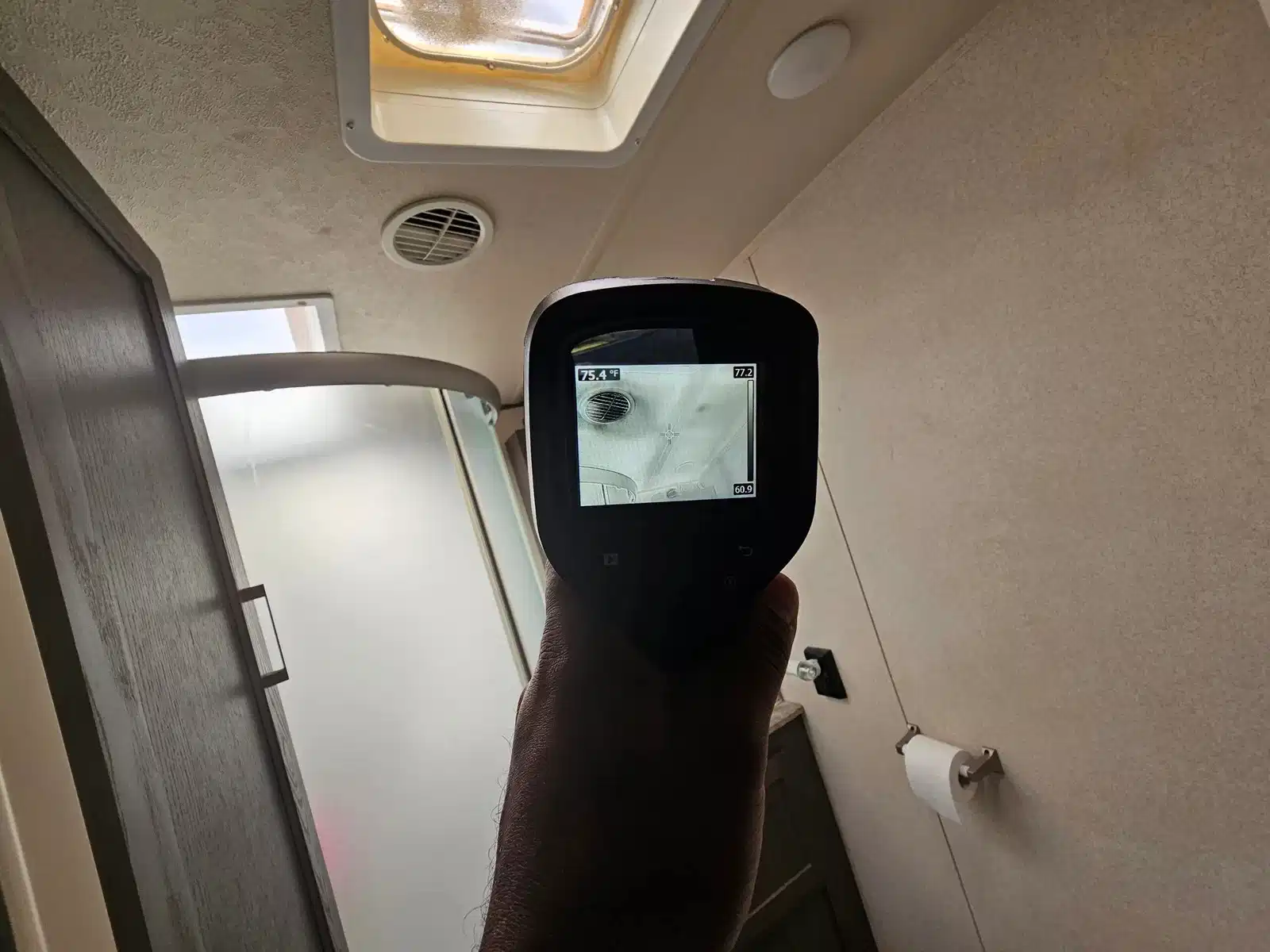
Leak detection & moisture mapping
We begin with non-invasive leak detection and moisture mapping to locate damp materials and narrow down the likely source before opening walls. Moisture readings and thermal imaging help guide the investigation; concealed leaks may still require controlled access to confirm their source.
02Assess and coordinate
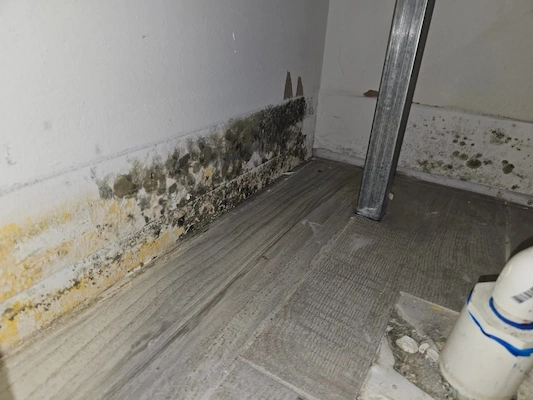
Mold assessment & a clear plan
Based on the moisture findings and visible conditions, we determine whether a mold assessment is needed. When it is, we use the mold assessment report and remediation protocol to plan containment, define the work area, and coordinate a start date for invasive leak detection together with mold remediation.
03Separate the work area
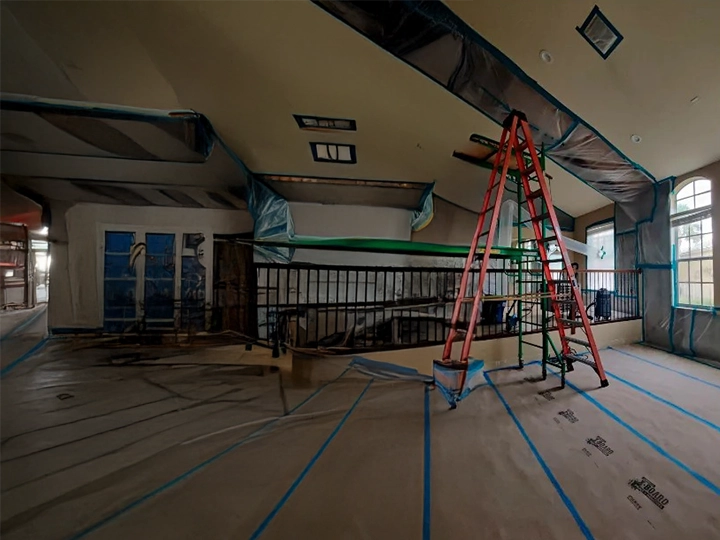
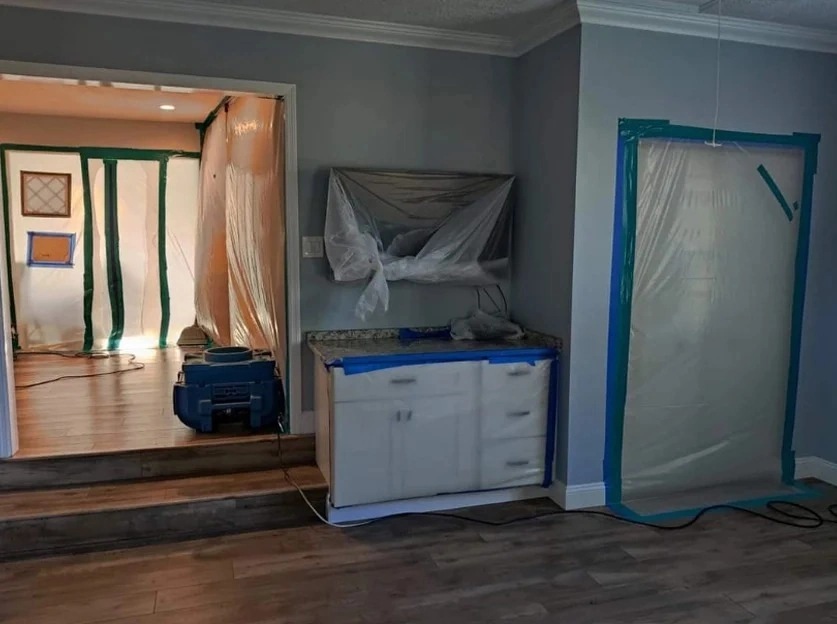
Containment & vapor barriers
Temporary polyethylene barriers seal off the work area and help limit the spread of dust, debris, and mold particles into surrounding rooms. These containment barriers create a controlled workspace before materials are disturbed. They serve a different purpose from a permanent vapor barrier installed within a building assembly to manage moisture movement.
04Control the airflow
Negative air & HEPA filtration
Negative air keeps the contained work area at a lower air pressure than adjoining spaces, drawing air inward rather than allowing contaminated air to escape. A properly configured HEPA-filtered exhaust system helps capture airborne particles and maintain this airflow during controlled work. Air filtration alone does not establish negative pressure.
Learn more: EPA guidance on containment and negative pressure.
05Investigate and remediate
Invasive leak detection & mold remediation
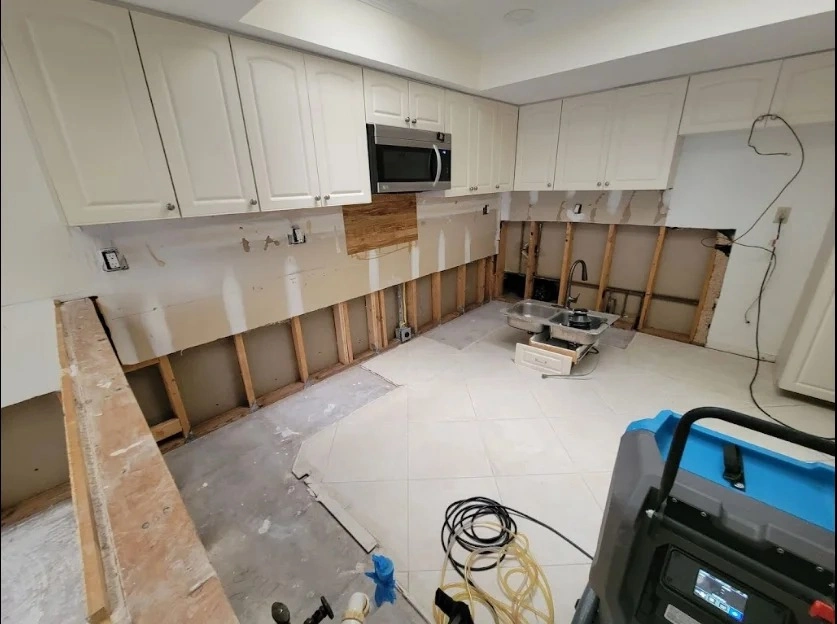
Once the required assessment, plan, and protective controls are in place, we coordinate targeted wall openings to trace concealed leaks and access affected materials. Where mold remediation is needed, the work follows the remediation protocol so investigation and removal are planned together, with the leak source addressed as part of the overall project.
06Dry and monitor
Water damage drying & moisture checks
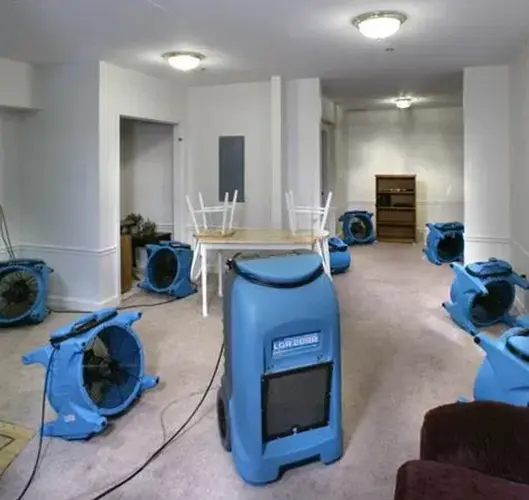
Drying equipment and moisture checks help track the condition of affected materials as the project progresses. The drying approach is coordinated with leak correction and any required remediation, with progress reviewed before the next stage of restoration.

Here when storms leave damage behind
Storm Damage
Storms can leave water intrusion and hidden moisture behind. AquaSeekers helps property owners identify affected areas and plan water removal, drying, and restoration.
Water & flood restoration →More from the gallery
Cleaning & restoration services
Explore other examples from our existing photo collection, organized by service.
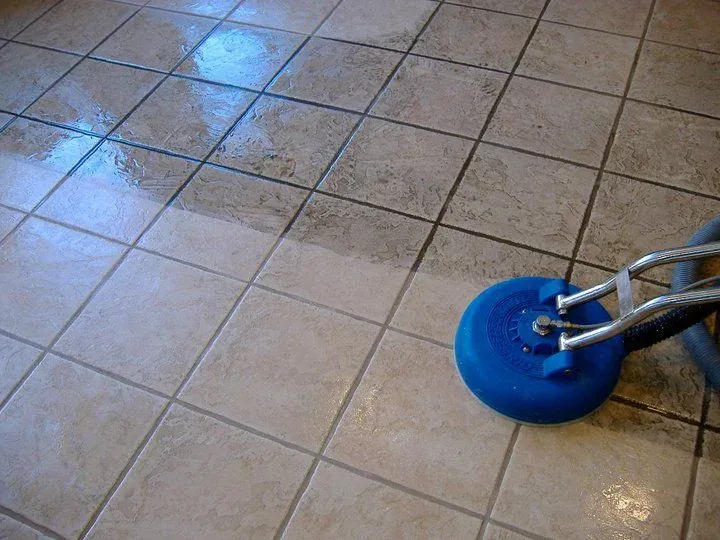
Tile & grout cleaning
Explore this service →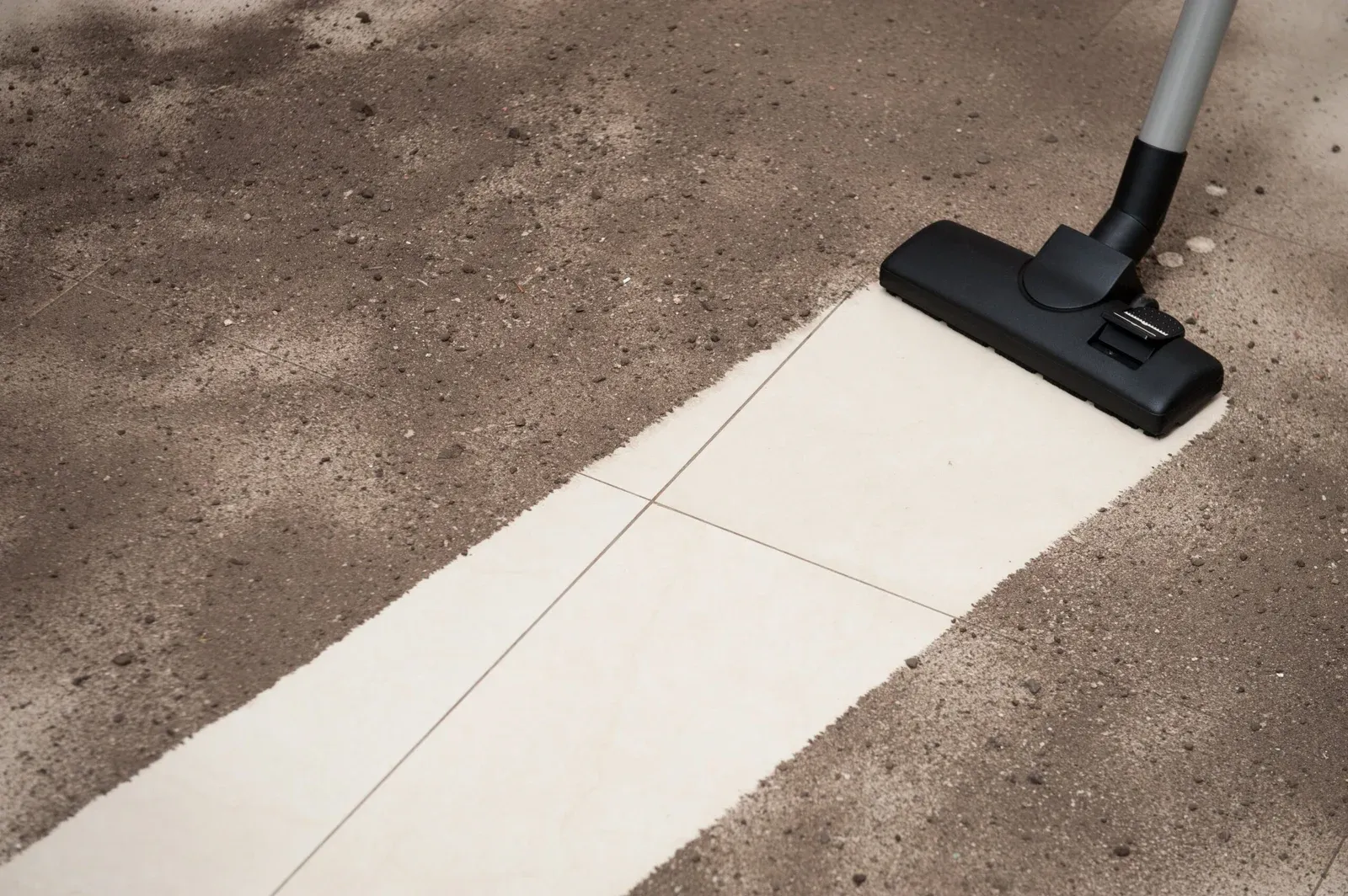
Carpet cleaning
Explore this service →Start with a clear next step.
Tell us what you are seeing. We’ll help you plan the next stage.